
Your Place for Games
Total Escape Games is a tabletop game store where knowledgeable staff, approachable events, and a welcoming community make it easy to find your next favorite game (and your next hobby).
Trusted by thousands of gamers in the Denver Metro Area, we're your one-stop shop for everything tabletop!
Games for Everyone
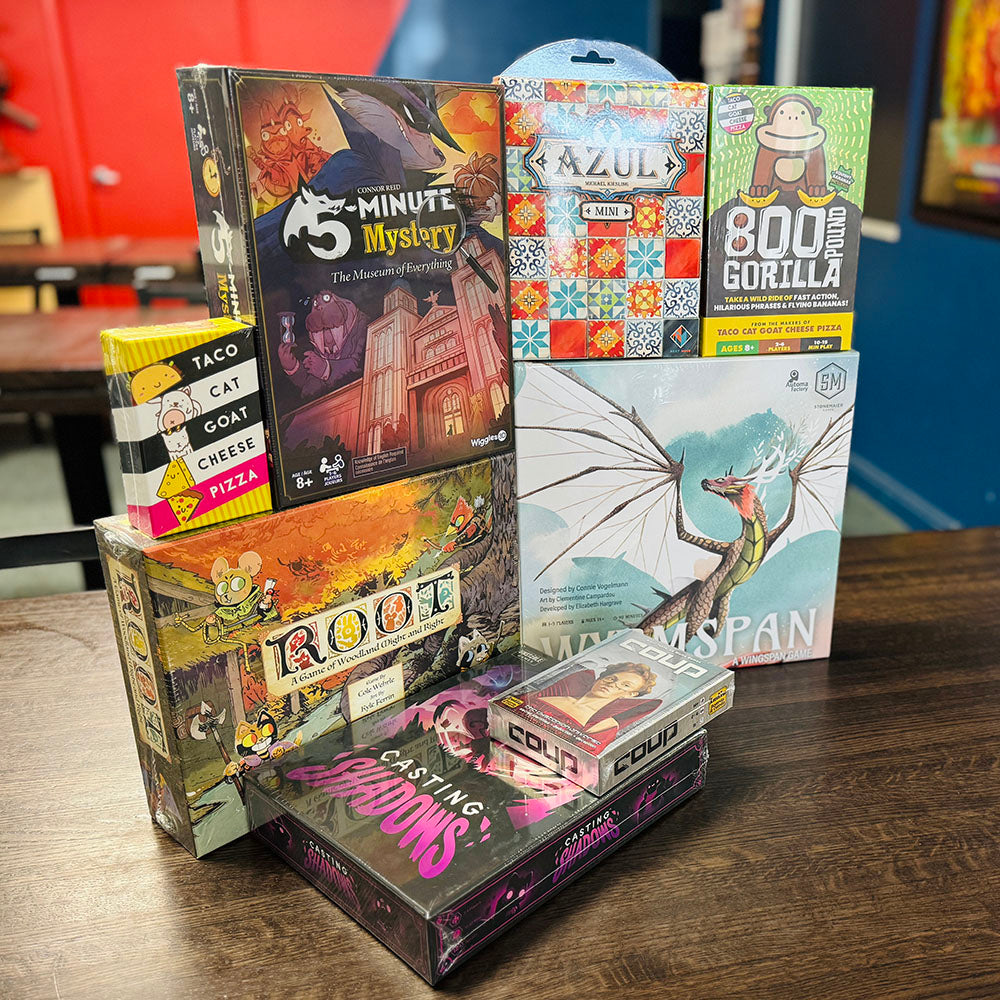
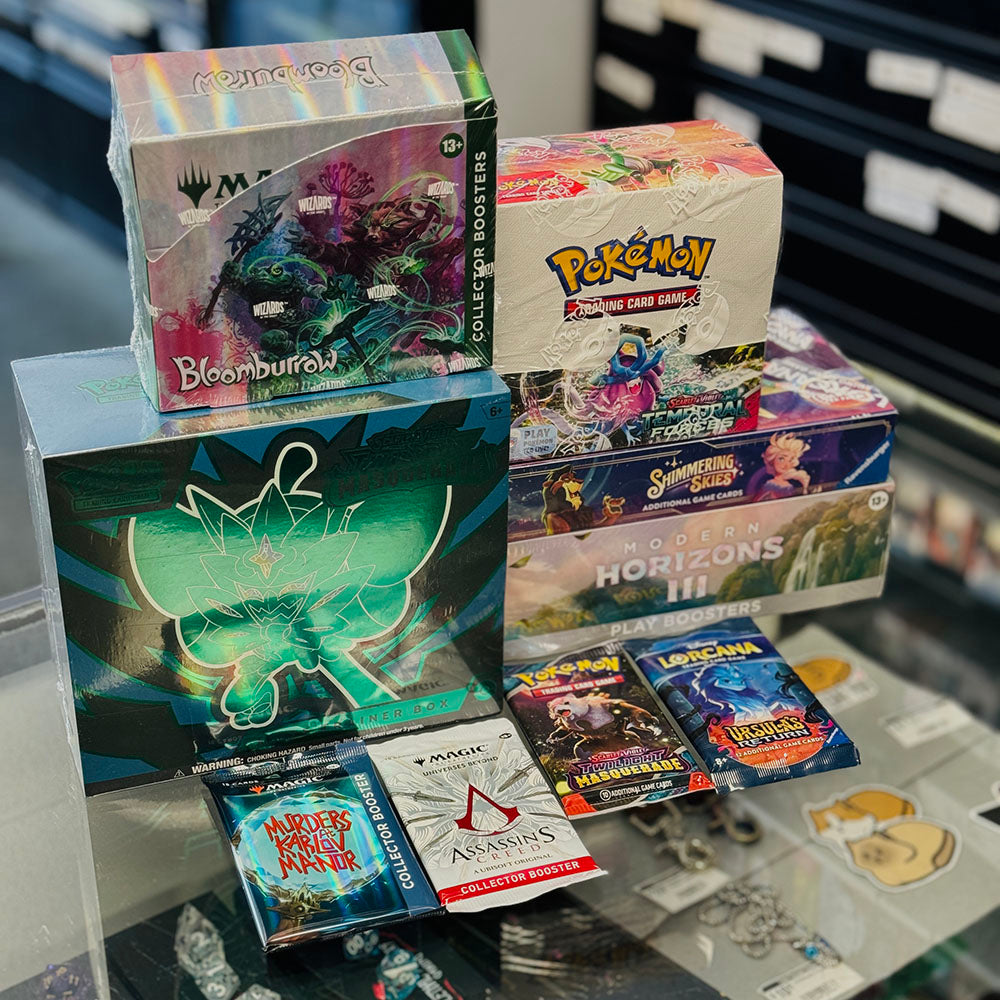


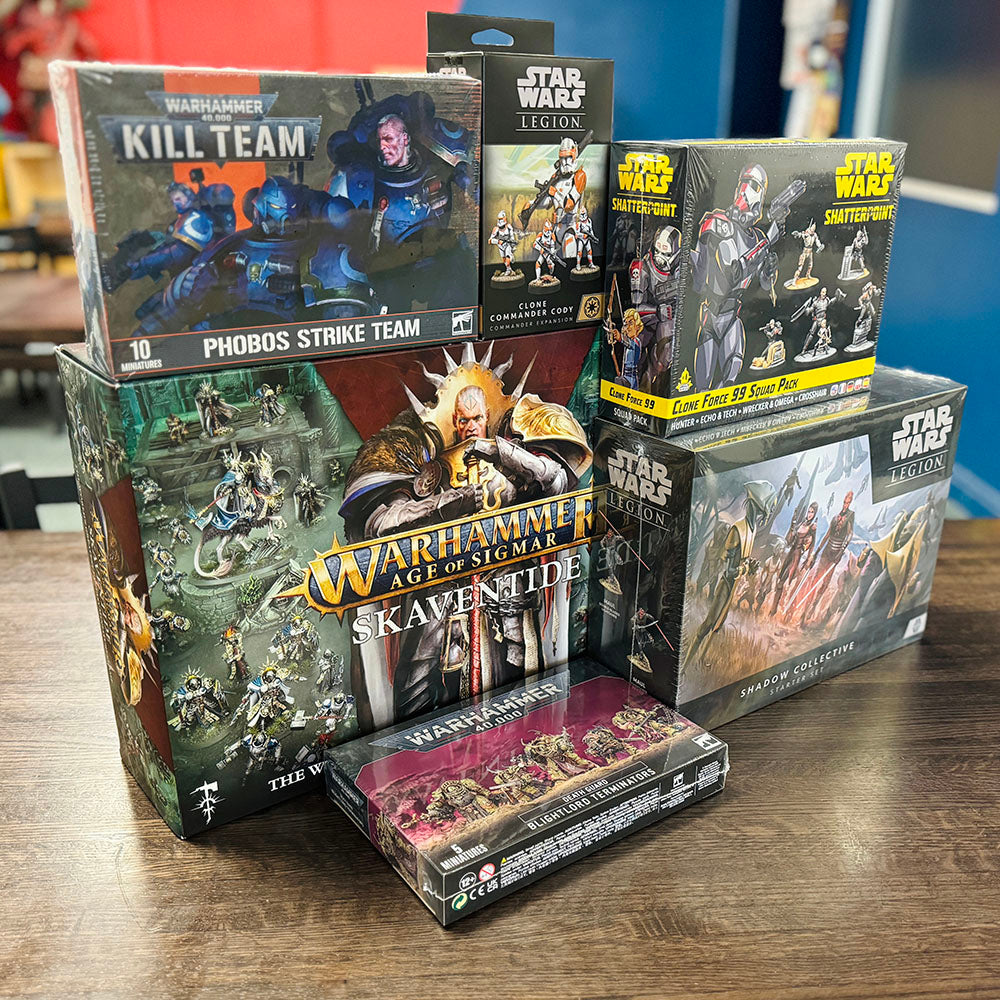
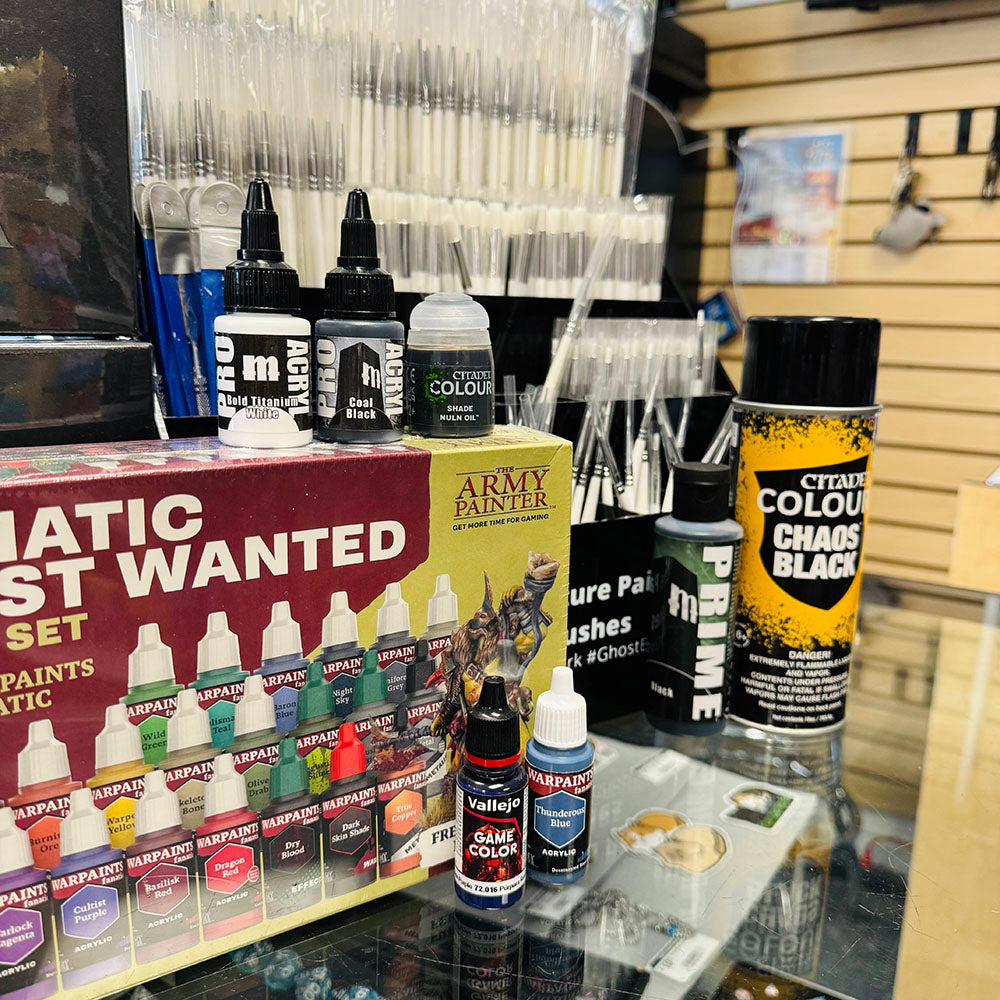

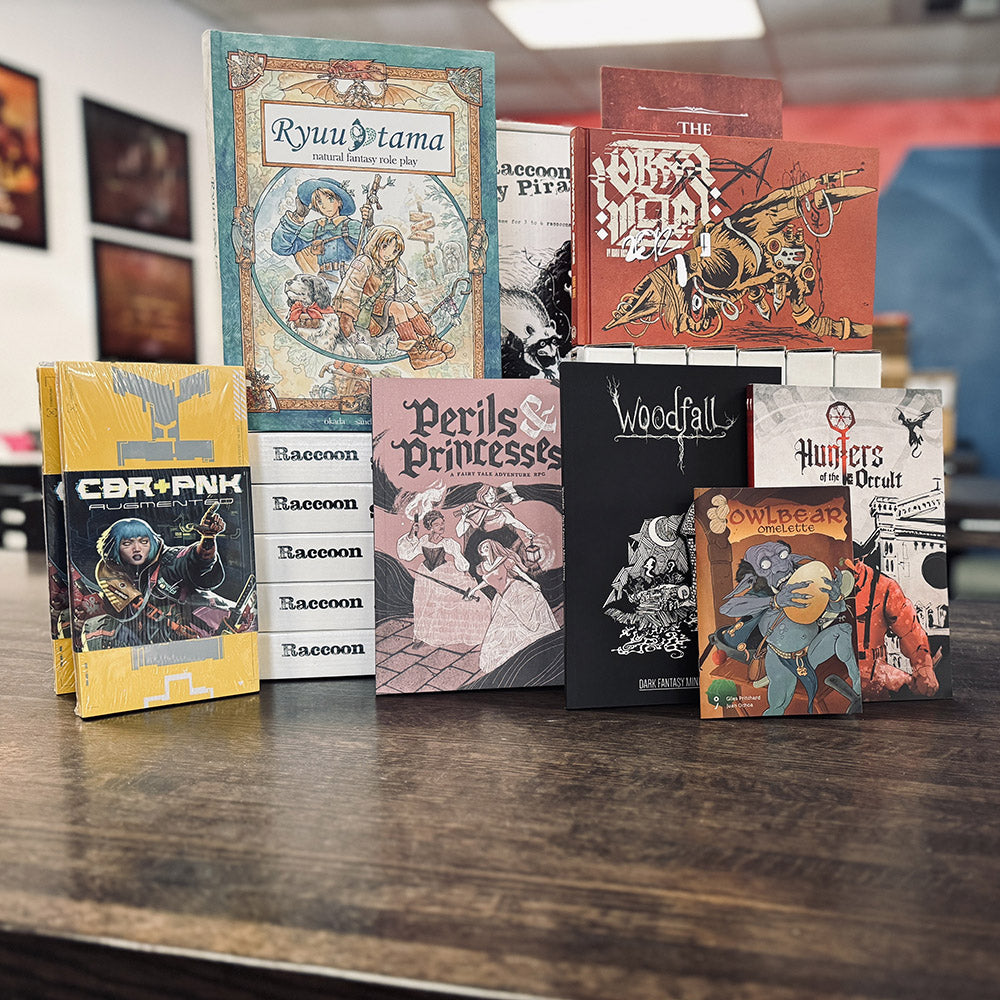


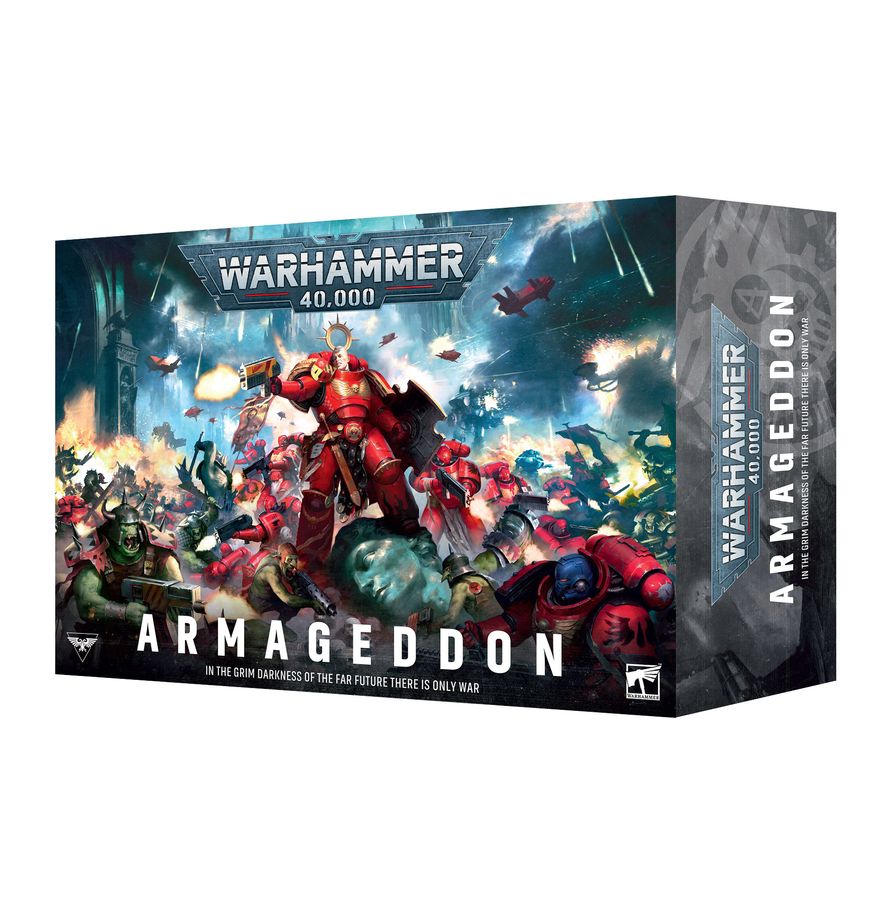


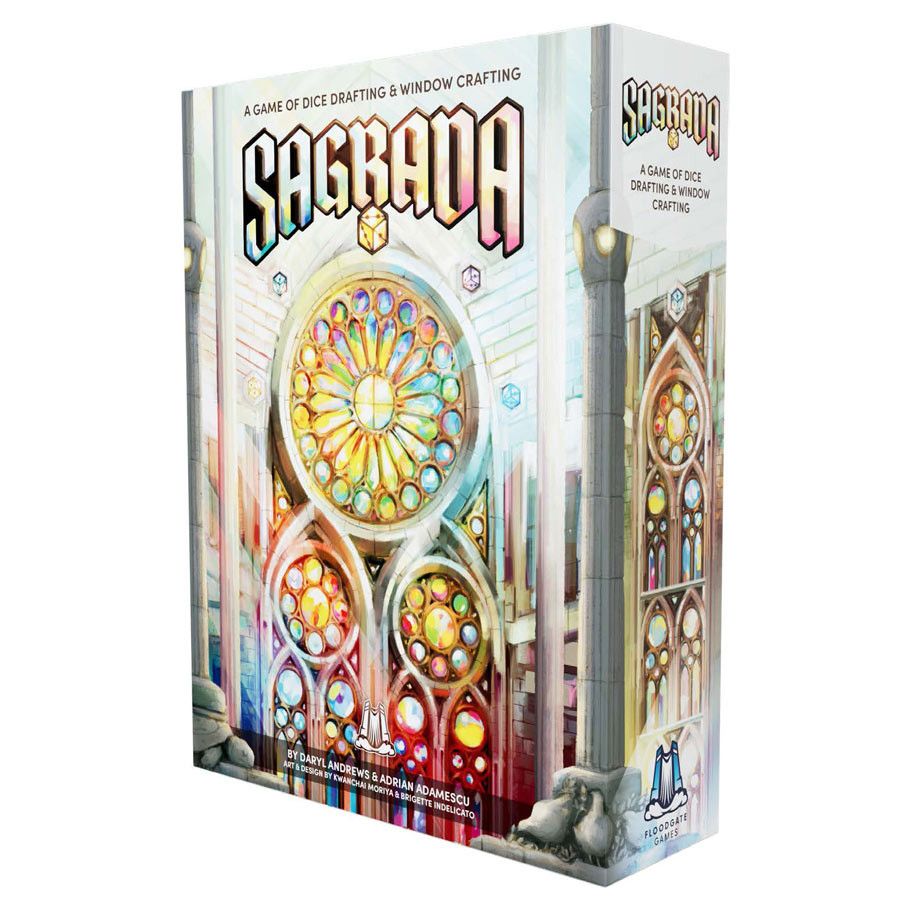


Looking for something not listed? See if we can special order it for you
Join the local community
It can be hard to find new friends.
We make it easier by hosting a wide array of events so you can connect with local gamers in the Denver Metro Area.


Join us on Discord
We run a community server of over 2,000 local gamers, hobbyists, and families.
Sign up to meet local players, get exclusive news updates, and have the first shot at upcoming pre-orders.
Blog posts

Magic the Gathering x Star Trek: Bolding Going to Prerelease Weekend
Last weekend was our Star Trek prerelease, the latest in a growing line of Universes Beyond sets featuring some of the most popular and widely-recognized franchises across media. It was really cool to see not only the new cards (shout out especially to the shock lands which, between the art and the custom border look incredible), but also hear about your excitement to play with cards from your favorite Star Trek series'. While we know there are some personal preferences when it comes to liking a Universes Beyond set (if you're not a Trekkie, for example, some of this set's most clever references would be lost), we want to thank everyone who came out to our events this past weekend! It was a ton of fun seeing you get excited about Spock, or open an alternate-art card written entirely in Klingon, and explore the final frontier of space. Playing a Universes Beyond Prerelease Participating in a Universes Beyond set, whether prerelease or draft, is mostly the same as any flagship Magic set--besides seeing your favorite characters, or recognizing specific settings, at least. While the sealed items for a Universes Beyond set cost more (packs, boxes, etc.), our prerelease events are always $39.99. We do this to make them as accessible as possible, to as many types of fans as possible. Once you arrive, it's our usual tournament check-in process. We sold tickets through out website which included a code for the MTG Companion App. Note that we highly recommend using the app--Wizards has worked hard to incorporate it into the tournament experience, and they've done a great job. Checking in using the app makes it easier for us to confirm your attendance and saves you time when you arrive. Once everyone's checked in, we make some rules announcements, go over new mechanics from the current set, and play a short explainer video of what to expect during that set's specific prerelease event. Then, we pass out sealed prerelease kits, each containing 6 packs plus a foil rare or mythic rare card from the set that you'll use to build your deck. Note that for two-headed giant, each team gets 2 of these kits, instead, and can share cards from between them. Rounds and Prizes For a traditional prerelease, we play 4 rounds, and for two-headed giant, we play five. On Sunday nights, to keep things extra-casual and mellow, we play 3 rounds, and give out a pack to everyone who won their match at the end of each round (commonly known as "pack rounds"). For the rest of our events, two packs per person are added to the prize pool, which we then split and pay out to individuals or teams with a positive record. In a 4-round event, that means two wins, one draw, and one loss, or better. In a 5-round event, that means three wins and two losses or better. There's some intricate math in certain edge cases, but a short way to know if you'll win prizes is if the number of wins you hold is higher than the number of losses. Prereleases are our most casual-friendly event, requiring only a basic understanding of how to play, and so tend to be extra fun and relaxed. Players are courteous and helpful, and it's not uncommon to see players giving constructive feedback on each other's decks between rounds. More Ways to Play Magic Whether you attended the Star Trek prerelease and want more, or are looking to get into events now, instead, there are so many options available! Especially if you're from the greater Denver metro area, we're a great place to play Magic, as well as other card games, miniatures games, and other tabletop hobbies. We've been here for almost 18 years and would love to have you at our next events. We run draft every Friday, for example. Besides prerelease, it's our most new-player-friendly Magic event. We provide the cards in the form of sealed booster packs, so you just need to bring yourself and a basic understanding of how to play a game of Magic. In fact, tonight, we have our release-night Star Trek draft, so stop by if you're excited by Star Trek but didn't get to attend the prerelease! Otherwise, as we go into the holiday season, we'll see a break in new sets. Instead, enjoy the holidays, pick up gifts, and continue to refine your Magic skills before the new year comes around. Once it's 2027, we'll have a whole lineup of new Magic sets releasing, starting with Nauctis: The Sunken Realm at the end of January. *All photo credit goes to Ryan Taylor, who continues to do incredible work in photographing our events.
Learn more
Gundam Assemble - Piloting Giant Robots is Easier Than You Think!
This is Not a Blog Post We're still a long way off from being able to pilot giant mechanized robots (maybe a good thing) and freeing our souls from gravity, but Bandai has swooped in to give us the next best thing: Gundam Assemble! This miniatures game is the newest addition to the Gundam franchise, allowing you to bring your favorite mobile suits together from across every series to answer the ultimate question every game: which mobile suits are the best and why is it Pale Rider? A Look At The Cards Before we jump in to how to play, we need to look at the cards we'll be using. There's two kinds of cards in the game: Unit Cards and Tactics Cards. They're both really important, so let's look at each. Unit Cards Every unit card looks pretty similar to this, just with different abilities. Here is a quick rundown on what each bit means: A- This unit's Health Points. When it has damage on it equal or more than this number, it's destroyed and will have to be redeployed back at your base later! B- This is how many Victory Points your opponent gets when they destroy this unit. As you win the game by having more victory points than your opponent at the end of Phase 2, destroying enemy units is a pretty good way of earning them. C- This number is where on the Timeline this unit starts the game. The lower on the Timeline it starts, the sooner it gets to act in the beginning! D- The name of the unit. It's important to know that you can have unit's with the same name, but they can not be the exact same unit card (with the exception of models designated by the Mass Produced tag) E- These are the different tags your unit has! They're important to know for any tactics cards you want to use or abilities that might reference them. F- This is what an attack profile looks like. Most units have two you can pick from and they have a few different things to them: It's Timeline Cost, which is how far it moves up the Timeline when used; It's Range, which is how far away a unit can be and still target an enemy; It's Strength, which is how many dice you roll before modifiers when you use the attack; Any abilities the attack has (this particular Char's Zaku II doesn't have any); It's Critical Effect, which will activate when one of your dice rolls a 9 or 10 during an attack! G- These are the abilities unique to this unit. Some are ongoing bonuses that will always be active, some might activate in response to something happening, and others might require you to activate them as a command on your turn. You can use each Command ability on your unit card once per turn. Tactics Cards Your Tactic deck is made up of nine unique cards. They all have strong abilities that can help swing the game in your favor and you can only play one per activation, so knowing when to use them is important: A- This is the type of Tactic Card it is. There are two types: Command and Response. Command Cards can only be used during your activation at any time so long as you aren't in the middle of resolving an action. Response Cards can be used during any activation (even your opponents) as long as you meet its conditions in the ability text. B- This is the card's ability text. When you play the card, you do whatever it says here. If it's a Response card, it'll tell you when you can use it. You can not play a Response card if you do not meet the conditions on it. C- These are the card's tags; you'll notice that they look pretty similar to the ones on units cards. That's because the unit that is using the card needs to have a tag that matches the one on the card. If the unit you're activating or using the response card doesn't have a matching tag, you can't play that card. If a Tactics card has no tags, then any unit can use them! D- The card name. You can not have any duplicate cards in your Tactic deck. Core Gameplay So you've gotten your Starter Set and put your models together. You might have even painted them- so what do we do now? Conveniently, the game makes it very easy to jump in: Pick three of your favorite mobile suits, make a deck of nine tactics cards, then just pick and set up a scenario (there's two in the starter). Last, draw three cards from your Tactic deck, and you're all set to go! Gundam Assemble's gameplay is centered around its Timeline: a representation of the flow of battle as units maneuver, attack, and complete mission objectives. When the Timeline reaches your unit, it gets to activate! Every unit gets a free move on it’s turn, then it has to do a Primary Action that has a Timeline Cost. These Primary Actions include Dashing for additional movement, Attacking enemies, Rescuing allied garrisons for Victory Points, or Energizing your unit so it can use powerful abilities. Once you use a primary action, you move your unit’s timeline tracker forward a number of spaces on the timeline based on the cost of the action, showing that it’ll activate again later in the Phase when the timeline reaches it again! If there are any other allied units on the same spot, then your unit that just activated goes underneath them, showing that the other units will activate before the unit you just used. If you and your opponent both have units on the same timeline, then the player who did just activate goes. Once all units have crossed over the end of the phase, you'll score points base on the scenario objective and then draw three new tactics cards from your tactics deck. If that was the second phase of the game, then you count up Victory Points. The player with the most wins! Your mobile suit's free movement is called an Advance, and it can be used at any point during it's activation. This allows them to move up to three spaces on the map. Moving up elevation costs 1 additional movement per difference in elevation you're moving. In this example, the Zaku II Enforcer needs to spend 2 of it's movement to move up one elevation to grab the upgrade. However, if you move from higher elevation to lower elevation, you have no movement penalty (and there's no fall damage)! You can even jump across gaps as long as it's the same move action. When you end your movement on an upgrade, you pick it up and add it to your unit! It's permanently there until some effect destroys it. Not even your own unit's destruction gets rid of it. Each one does something different, and all of them are useful. Strength upgrades let you roll extra dice when you attack. Shield upgrades prevent damage you take and reactivate the next time your unit activates. Movement upgrades increase the amount of spaces you move when you Advance (not Dash). Here's the Primary Actions available to you and with the exception of attacking, they all cost 2 Timeline: Dash gives you a little extra movement, and is a separate move action from your Advance which important in some scenarios as well as for grabbing upgrades. Energize gives you an Energy token. All your units will have an ability that will cost energy, and this is the primary way to get those Energy tokens to use them. Rescue lets you save an allied Garrison and get two victory points! You'll remove it from the board and put it into your Victory Points on the Timeline. It's important to keep track of how many you've saved since some abilities are more powerful the more garrisons you've Rescued. Attack is the primary way of doing damage to enemy units and Garrisons (it's not the only way though). To make an attack, we have to pick a target in our attack's range, then check line of sight. Line of Sight can be slightly hard to understand at first, but once you know it you won't forget. Just draw an invisible line from the center of your unit's base to the center of your target's base. If that line passes through a space with any of the following, you don't have Line of Sight: An enemy unit or Garrison Terrain of a higher elevation than your current elevation Terrain of the same elevation as the unit at the highest elevation (this is the tricky one, so here's a quick visual). In this image, Gundam Vidar and Char's Zaku II can not see each other. This is because the highest unit, Gundam Vidar, has another space of equal elevation to it between it and Char's Zaku II. If we draw that invisible line directly between the two units, it would pass through that piece of terrain. Once you've determined your target is in range and that you have line of sight, gather a bunch of dice equal to that attack's Strength as well as an additional die for each Strength upgrade on your attacking unit and roll them! You'll do 1 damage to the enemy unit for each die you rolled that shows a 4 or higher. If any of your dice were a 9 or 10, then your attack also got a Critical, and you'll be able to use that attack's Critical Effect! Lastly, if you're on higher elevation than your opponent, you get +1 to your dice roll meaning you do damage when you roll a 3 or higher. However, if they're higher than you, you get -1 to your dice roll, meaning you do damage when you roll a 5 or higher instead. Once you're done with your attack, move your unit's Timeline tracker up equal to the Timeline Cost of the attack. In this image, Char's Zaku II attacked the Guncannon with it's Machine Gun. They are on the same elevation, so there are no modifiers to the dice roll. After rolling 5 dice, it got 3 successful hits, one of which is a critical! Guncannon will take 3 damage, and Char's Zaku II will be able to use it's Machine Gun's Critical Effect allowing it to get a free Dash after combat damage! After doing damage, if the enemy has damage on it equal to or greater than the HP on it's unit card, that unit is destroyed. It will get removed from the board and put onto it's unit card, then all damage and negative effects will be cleared from it (it still keeps any energy and upgrades). Then the destroyed unit will have it's Timeline tracker moved up 2 spaces as it gets repaired back at base. You'll also get victory points equal to that unit's VP value as a reward for taking them out! Garrisons all have 1 HP and are worth 2 VP when destroyed! (Not so) Distant Memories Release That's the basics of Gundam Assemble! There's a little we didn't cover here like scenarios (since each one brings its own rules) and different types of terrain that modify your movement and accuracy, but armed with what you know now you're just one step away from being a Gundam. Release is on October 31st (though Bandai has announced potential shipping delays that may mess with it), and we will have Organized Play every Monday at 6:30! Our first official events, that Bandai is calling Friendly Battles, are due to start on November 16th, where you can get cool promos for playing and doing neat hobbying stuff. Hope to see you there, buddy! Special thanks to a wonderful regular of ours who painted and brought in their starter set! I know that last reference was an Armored Core 6 reference. I'm not apologizing.
Learn more
Recapping our Riftbound Pre-Rift Event - October 17, 2026
Riftbound: Radiance, the newest set for the League of Legends card game, is nearly here! With it releasing on Friday, October 24, we ran a couple of Pre-Rift events this past Saturday to let players get their hands on the new cards early and experience the set. If you're not familiar, a Pre-Rift event is just like the classic prerelease event for other card games: you get a kit of 5 packs plus a thematic pack including a legend (making sure you can actually, you know, play Riftbound), and then you open your packs and build a small deck. Because everything you need comes from the kit you get with your entry, pre-rift is a great way to get into the game after learning the basic rules, and is considered a "sealed" event. We saw over 60 local players across our two events--thank you to everyone who came out to play! We know it was a busy and hectic day, and we so appreciate you choosing us to be your Riftbound destination this weekend. Deckbuilding Once the event started, we passed out kits and gave everyone 45 minutes to build their decks. Each deck has to include a minimum of 25 cards--typically, that's also the maximum, since it reduces randomness as much as possible. Then, we provide runes so you can actually play your cards. Imagine if you had to open the right runes to play! What a nightmare. Here's a few highlights from deckbuilding. It's always a fun time once you've got your cards in front of you as you try to figure out how it all slots together to make the best possible deck. Plus, you get to gawk at the coolest legends and rare cards you opened. Rounds After deckbuilding, we played three rounds of Swiss best-of-3. Since it's a pre-rift event, it's nothing too intense. It's definitely not like a Summoner Skirmish, although we do have one of those coming up in November if you need to scratch your competitive itch! Instead, gameplay is friendly, and our judges, Adam and Josh, were around in case anyone needs help understanding the rules or resolving issues mid-game. People could also help one another, give suggestions, and modify their decks between rounds. Future Events We'll host a Pre-Rift for the upcoming set, Legacy, between January 22 and 28th next year. In the meantime, we have our weekly Nexus Night tournaments every Thursday night (besides this one, since we're hosting another pre-rift, instead). They're $10 to entry, start at 6:30p, and last for about three hours. Once you have your own deck and you want to get practice playing through games, it's a great place to go. You can also check our event calendar to see our upcoming events!
Learn more
Frequently asked questions
Any question about our products and services?
Check if you can find them here or
Contact us
What events do you host?
What events do you host?
We host a wide variety of tournaments, open play, and teaching events! Find out more on our event calendar or by joining our Discord server.
Which card games do you carry?
Which card games do you carry?
We are currently stocking boxes, packs, and accessories for Magic the Gathering, Riftbound, Pokémon, Gundam, One Piece, Disney Lorcana, and Star Wars Unlimited.
Do you sell card game singles?
Do you sell card game singles?
Yes, we take in Magic the Gathering and Riftbound singles based on TCGplayer Market Pricing. For more information on our policies, check our card singles page.
We do not give quotes over the phone or by email, but always have a staff member available in-store to help you.
Do you buy used games?
Do you buy used games?
Unfortunately, we do not currently accept used games for trade-in.
Do you sell video games?
Do you sell video games?
We are a tabletop gaming store only, meaning we do not carry any electronics or video games.
Are you an escape room?
Are you an escape room?
Nope! Despite having "escape," in the name, it's all tabletop games here.
Fun fact: we opened in 2009, and the first escape room opened in 2012 in California!
What payment methods do you accept?
What payment methods do you accept?
We accept various payment methods including credit/debit cards, Apple Pay, and Google Pay. Secure payment options ensure a smooth and safe checkout process.

Stop by our Store
We're open 7 days a week.
10:30a - 9:30p Mon - Sat
11:30a - 7:30p Sun